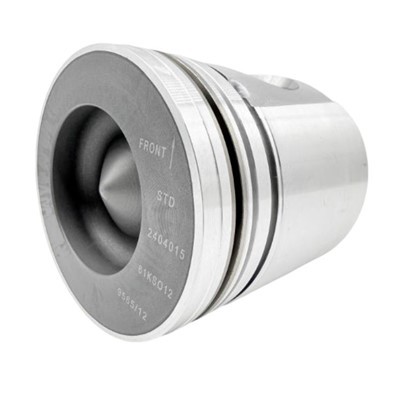
In the automotive and industrial sectors, pistons play a crucial role as key components within engines. As a piston supplier, I am deeply involved in the world of piston manufacturing, and I am excited to share the common piston manufacturing processes with you. Piston
Casting Process
Casting is one of the most widely used methods for piston production. It involves pouring molten metal into a mold to create the basic shape of the piston. There are several types of casting processes commonly employed in piston manufacturing.
Gravity Casting
Gravity casting is a relatively simple and cost – effective method. In this process, the molten metal is poured into a mold under the influence of gravity. The mold is usually made of sand or permanent metal. For pistons, aluminum alloys are often used because of their lightweight, good heat conductivity, and high strength – to – weight ratio.
The advantage of gravity casting is its simplicity and low cost. It is suitable for small – to – medium – scale production. However, it may have some limitations in terms of dimensional accuracy and the presence of porosity. Porosity can affect the mechanical properties of the piston, such as its strength and fatigue resistance.
Low – Pressure Casting
Low – pressure casting is an improvement over gravity casting. In this process, the molten metal is forced into the mold under low pressure (usually around 0.02 – 0.05 MPa). This helps to reduce porosity and improve the density of the piston. The pressure ensures that the molten metal fills the mold more uniformly, resulting in better dimensional accuracy and mechanical properties.
Low – pressure casting is often used for high – quality pistons, especially those required for high – performance engines. It is more suitable for large – scale production as it can produce pistons with consistent quality.
Investment Casting
Investment casting, also known as lost – wax casting, is a precision casting process. It starts with creating a wax pattern of the piston. The wax pattern is then coated with a ceramic shell to form a mold. After the ceramic shell is dried and hardened, the wax is melted out, leaving a cavity in the shape of the piston. Molten metal is then poured into the cavity to create the piston.
Investment casting offers high dimensional accuracy and excellent surface finish. It can produce complex piston geometries with thin walls and fine details. This process is often used for high – end pistons in racing engines and aerospace applications, where precision and performance are of utmost importance.
Forging Process
Forging is another important manufacturing process for pistons. It involves shaping the metal by applying compressive forces. Forged pistons are known for their high strength, excellent fatigue resistance, and good grain structure.
Open – Die Forging
In open – die forging, the metal is placed between two flat dies, and the dies are then pressed together to shape the metal. This process is relatively simple and can be used to produce pistons with a basic shape. However, it may require additional machining operations to achieve the final dimensions and surface finish.
Open – die forging is suitable for small – batch production or for producing pistons with simple geometries. It can be used to work with a variety of metals, including steel and aluminum.
Closed – Die Forging
Closed – die forging is a more precise and complex process. In this process, the metal is placed in a die cavity that has the exact shape of the piston. The dies are then closed, and the metal is forced to flow into the cavity, taking on the shape of the piston.
Closed – die forging can produce pistons with high dimensional accuracy and excellent mechanical properties. It is often used for mass production of high – quality pistons. The process can also be used to work with different types of metals, and it allows for the production of pistons with complex shapes and features.
Machining Process
After the casting or forging process, the pistons usually require machining to achieve the final dimensions and surface finish. Machining operations include turning, milling, drilling, and grinding.
Turning
Turning is a common machining process used to shape the outer diameter and end faces of the piston. The piston is mounted on a lathe, and a cutting tool is used to remove material from the surface of the piston. Turning can be used to achieve precise diameters and smooth surface finishes.
Milling
Milling is used to create features such as grooves, slots, and keyways on the piston. A milling machine uses a rotating cutting tool to remove material from the piston. Milling can be used to produce complex shapes and features on the piston surface.
Drilling
Drilling is used to create holes in the piston, such as oil holes and pin holes. A drill bit is used to penetrate the piston material and create the desired holes. Drilling requires high precision to ensure that the holes are accurately located and have the correct diameter.
Grinding
Grinding is a finishing process used to improve the surface finish and dimensional accuracy of the piston. A grinding wheel is used to remove a small amount of material from the piston surface, resulting in a smooth and precise finish. Grinding is often used to achieve the required surface roughness and flatness of the piston.
Heat Treatment Process
Heat treatment is an important step in piston manufacturing to improve the mechanical properties of the piston. There are several types of heat treatment processes commonly used for pistons.
Annealing
Annealing is a heat treatment process that involves heating the piston to a specific temperature and then cooling it slowly. This process helps to relieve internal stresses in the piston, improve its ductility, and reduce hardness. Annealing is often used after casting or forging to prepare the piston for further machining operations.
Quenching and Tempering
Quenching and tempering are two – step heat treatment processes. Quenching involves heating the piston to a high temperature and then rapidly cooling it in a quenching medium, such as oil or water. This process hardens the piston by forming a martensitic structure. However, quenching can also make the piston brittle.
Tempering is then carried out to reduce the brittleness of the quenched piston. The piston is heated to a lower temperature and held for a specific time, followed by slow cooling. Tempering helps to improve the toughness and ductility of the piston while maintaining its hardness.
Surface Treatment Process
Surface treatment is used to improve the wear resistance, corrosion resistance, and lubrication properties of the piston. There are several surface treatment methods commonly used for pistons.
Hard Anodizing
Hard anodizing is a process that creates a hard, wear – resistant oxide layer on the surface of the piston. The piston is immersed in an electrolyte solution, and an electric current is passed through it to form the oxide layer. Hard anodizing can significantly improve the wear resistance of the piston, especially in high – friction applications.
Coating
Coating is another surface treatment method used for pistons. There are various types of coatings, such as ceramic coatings and diamond – like carbon (DLC) coatings. These coatings can provide excellent wear resistance, low friction, and corrosion protection. Coating can be applied to the piston surface using techniques such as physical vapor deposition (PVD) or chemical vapor deposition (CVD).
As a piston supplier, we have extensive experience in these manufacturing processes. We are committed to producing high – quality pistons that meet the diverse needs of our customers. Our pistons are used in a wide range of applications, including automotive engines, industrial machinery, and power generation equipment.
If you are in the market for high – quality pistons, we would be more than happy to discuss your requirements with you. Whether you need pistons for a small – scale project or a large – scale production, we have the expertise and resources to meet your needs. We can provide customized solutions based on your specific requirements, ensuring that you get the best pistons for your application.
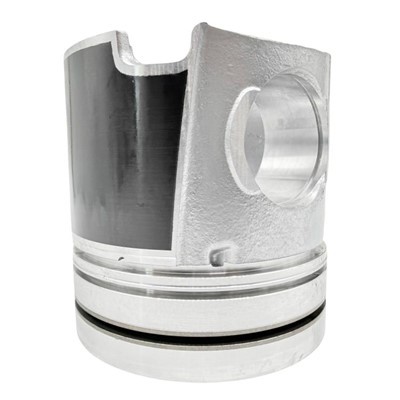
Contact us today to start a procurement discussion. We look forward to working with you to provide the best piston solutions for your business.
Weichai Piston References
-ASM Handbook, Volume 15: Casting.
-Metal Forming Handbook: Processes and Applications.
-Manufacturing Engineering and Technology by Serope Kalpakjian and Steven Schmid.
Hebei Yuwei Piston Co., Ltd.
As one of the most professional piston manufacturers and suppliers in China, we’re featured by quality products and good service. Please rest assured to buy customized piston made in China here from our factory. Also, quotation is available.
Address: Beizhujiacun Village, Sujiuzhuang Town, Ningjin County, Xingtai City, Hebei Province
E-mail: jack@ywpiston.com
WebSite: https://www.ywpiston.com/
