If you’ve been researching industrial wood processing equipment, you’ve likely come across tub grinders—large, heavy-duty machines that turn whole trees, branches, stumps, and even construction wood into mulch, biomass fuel, or raw material for landscaping and manufacturing. As a supplier of these units, I’ve seen firsthand how tub grinders are a workhorse for many operations, but no piece of industrial equipment is without flaws. Today, I want to pull back the curtain on the key disadvantages of tub grinders, based on decades of talking to operators who run these machines daily. This isn’t to discourage anyone from investing—instead, it’s to help you make an informed decision, whether you’re weighing your first grinder upgrade or looking to replace an outdated unit. Tub Grinder
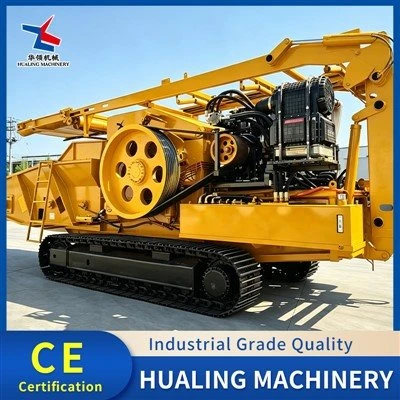
First, let’s talk about size and space requirements. Tub grinders are not small, portable tools. Most standard commercial models measure 12 to 20 feet in diameter and stand 10 to 15 feet tall, with a weight of 20,000 to 50,000 pounds or more. That means you can’t just tuck one into a corner of your yard or a small jobsite; you need dedicated, level space, often with reinforced flooring if you’re running heavy materials like stumps. I once worked with a landscaping company in the Pacific Northwest that tried to set up a mid-sized tub grinder in a compact gravel lot near downtown Seattle. Within a month, they had to move it when they realized the machine’s 18-foot discharge conveyor was blocking access to their storage bins for mulch. Even if you have the space, you need to account for clearance around the entire unit to load materials and remove finished product—forklifts and dump trucks need room to maneuver, too. For small operations, this can be a non-starter: if you only process 50 tons of wood a month, a tub grinder’s footprint and space demands just aren’t practical.
Next comes the massive power and energy costs. Tub grinders rely on a central rotor with hammers or teeth that can exert thousands of pounds of force to break down dense wood. Most commercial models run on diesel engines ranging from 300 to 700 horsepower, or if you opt for electric, they need heavy, three-phase power connections. The energy consumption is staggering: a 500-horsepower tub grinder can use 40 to 50 gallons of diesel fuel per hour when processing dense hardwood stumps. One of our long-time clients, a tree removal company in Ohio, told me their fuel costs for their tub grinder make up 25% of their monthly operating expenses—more than their payroll for part-time loaders. Even electric models aren’t cheap to run: the same 500-horsepower electric grinder can draw 350 to 400 kilowatt-hours per hour, which translates to several hundred dollars in electricity bills each day during peak use. For operations with tight profit margins, these ongoing energy costs can eat into profits quickly, especially if you’re processing lower-value materials that don’t generate enough revenue to offset the expense.
Maintenance and repair are another major downside. The hammers, teeth, and liners inside a tub grinder take constant, brutal abuse from wood, rocks, nails, and other debris that can end up in the feedstock. I’ve seen operators run a tub grinder for 500 hours straight without checking the hammers, only to have a hammer break off mid-operation, ricochet through the tub, and cause $10,000 worth of damage to the rotor. Regular maintenance isn’t just changing oil or tightening bolts—you have to inspect wear parts every 50 to 100 hours, and replace hammers, liners, and rotors every 1,000 to 2,000 hours, depending on how hard you run the machine. What’s more, replacement parts for tub grinders are not cheap: a set of 10 hammers can cost $1,500 to $2,500, and a full rotor overhaul can run $20,000 or more. Unlike smaller wood chippers that can be serviced by a single technician, tub grinder repairs often require specialized tools and knowledge. Most operators can’t fix a broken rotor or a faulty feed system on their own, so you’re stuck waiting for a service technician—sometimes for days if parts are out of stock—costing you in lost productivity and emergency service fees.
Feedstock limitations and safety risks are also critical to mention. While tub grinders can handle a wide range of wood, they’re not forgiving of foreign objects. Nails, bolts, rocks, and even metal construction debris are common in wood from tree removal or construction sites, and these can damage the grinder’s internal parts or become projectiles. I’ve had a client in Texas who had a nail fly out of their tub grinder and puncture a trailer 20 feet away, narrowly missing a worker. Even with magnet systems and pre-screening, it’s nearly impossible to catch every piece of metal or debris in feedstock. Additionally, the opening of a tub grinder is large and unguarded in many models, making accidental feedings a real danger. OSHA reports that between 2018 and 2023, there were 12 serious injuries related to tub grinders in the U.S., most from workers reaching into the tub to clear jammed material. While modern models have safety interlocks, they’re not foolproof, and rushing to clear a jam is a mistake many operators make that leads to injury.
Product consistency is another disadvantage that many operators overlook. Tub grinders are designed to process large volumes of material quickly, but that speed often comes at the cost of uniform particle size. If you need consistent mulch for landscaping, or biomass pellets that require uniform chunks, a tub grinder’s output can be inconsistent. The force of the rotor can split wood irregularly, leaving fines (fine sawdust) and oversized chunks mixed together. To fix this, you often have to add a separate screening process after the grinder, adding time and cost to your workflow. I worked with a biomass company in Michigan that tried to use a tub grinder for their feedstock, but they had to add two additional screeners to separate the fine and oversized material, which cut their overall production efficiency by 15%. For operations that need a consistent end product, this extra step is a major downside that might make a smaller, more specialized grinder a better choice.
Now, before you write off tub grinders entirely, let’s be clear: these disadvantages only apply if you’re not a good fit for the equipment. If you process large volumes of wood (100+ tons per month) and have the space, budget, and expertise to operate and maintain a tub grinder, they’re still one of the most cost-effective options on the market. But if you’re a small operation, have limited space, or can’t afford the ongoing energy and maintenance costs, a tub grinder might not be the right fit.
At the end of the day, the goal of any equipment supplier isn’t just to sell a machine—it’s to make sure it works for your operation. If you’re currently weighing your options for wood processing equipment and want to walk through how a tub grinder would fit (or not fit) your specific needs, I encourage you to reach out for a procurement discussion. We can talk through your monthly volume, available space, budget, and end product goals to help you make a decision that makes sense for your business.
Chain Type Wood Chipper References
- Occupational Safety and Health Administration. (2023). Industrial Wood Processing Equipment Safety Guidelines. U.S. Department of Labor.
- American Forest & Paper Association. (2022). Cost Analysis of Industrial Wood Processing Equipment. AF&PA Press.
- Wood Industry Digest. (2023). Tub Grinder Maintenance and Operational Efficiency Report. Wood Industry Publications.
- Environmental Protection Agency. (2021). Biomass Fuel Production: Equipment and Cost Considerations. EPA Office of Air and Radiation.
Shandong Hualing Machine Manufacturing Co., Ltd.
As one of the most professional tub grinder manufacturers and suppliers in China, we also support customized service with low price. Please rest assured to buy discount tub grinder in stock here from our factory. If you have any enquiry about quotation, please feel free to email us.
Address: Industrial Park, Dagong Village, Changshan Town, Zouping City, Shandong Province
E-mail: hualing@sdhualing.com
WebSite: https://www.hualingmachine.com/
