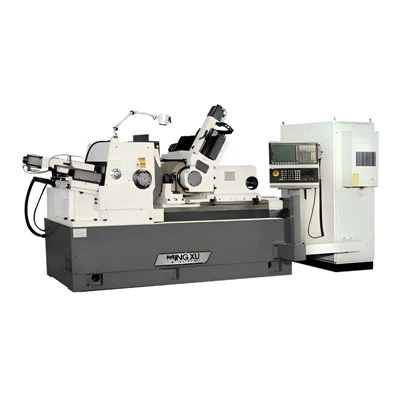
If you’ve ever walked the floor of a precision machining shop, watched a part roll through production with tolerances so tight they’re measured in microns, you’ve probably stood near a CNC centerless grinder and not even realized it. These machines are the quiet workhorses that turn raw bar stock into everything from automotive valve stems to medical implant components, and for decades they’ve relied on a core function: holding a workpiece in place between two wheels to grind it to exact dimensions, no center holes needed. For my team, a CNC centerless grinder supplier that’s spent 18 years refining these machines for small job shops and Fortune 500 facilities alike, the past three years have brought breakthroughs that aren’t just incremental—they’re rewriting what these grinders can do, how easy they are to use, and how much value they add to every production line they touch. I want to walk you through the advancements we’ve seen first-hand, not just as a supplier, but as someone who’s stood across the table from a production manager who once told us their centerless grinder was “more trouble than it was worth.” That story’s changed a lot, and here’s why. CNC Centerless Grinder
The biggest shift we’ve witnessed in recent years is the convergence of CNC precision with real-time process monitoring, a trend that solves the oldest pain points of centerless grinding: consistency, waste, and unplanned downtime. For decades, centerless grinders ran on static setups—operators calibrated the wheels, the work rest blade, and the regulating wheel once, then crossed their fingers that the part would stay within tolerance for thousands of units. If a wheel wore unevenly, or a batch of bar stock had minor hardness variations, you might not catch it until you pulled a finished part off the line, wasting hours of material and production time before the error showed up. Today’s latest CNC centerless grinders have onboard sensor arrays that track over 200 variables per second: wheel wear, workpiece diameter, grinding force, temperature at the contact point, even vibration that signals misalignment long before it affects the part.
Last quarter, we deployed one of our next-gen CNC centerless grinders to a medical device maker that produces 316L stainless steel bone screws. Before our machine, they had to stop production every 1,200 parts to re-calibrate, pulling 4-5 bad parts every time they checked, plus losing 2 hours of production per shift to downtime. Our machine’s in-process monitoring system adjusts the regulating wheel speed and work rest position automatically as the wheel wears, holding tolerance within ±0.002 mm for 10,000 consecutive parts. When the grinding wheel does need dressing (the process of re-shaping its abrasive surface), the machine signals the operator only when the abrasive layer is worn, not on a rigid schedule, cutting dressing time by 35% for them and reducing scrap parts by 92% in the first three months. That’s not just a spec on a datasheet—that’s $120,000 a year in saved labor and material for that single facility, a number that makes the phone ring non-stop when production managers hear it.
Another advancement that’s reshaping how shops use these machines is AI-powered process optimization, and I mean the kind of AI that’s tailored specifically to centerless grinding, not generic machine learning tools. A few years back, many suppliers added basic AI features that just adjusted speed when a vibration spiked, which was a gimmick at best. Now, we’re integrating machine learning models trained on over 500,000 grinding operations across industries—automotive, aerospace, medical, oil and gas—to create setups that work for a shop’s exact parts before the operator even loads raw stock. For example, a job shop that runs 50 different small-batch parts a month no longer has an operator spend 2 hours dialing in each new part; they just input the part’s CAD file, material type, and required tolerance into the machine’s HMI (human-machine interface), and the AI suggests the optimal wheel type, regulating wheel angle, and work rest height based on identical parts it’s processed before.
We tested this with a customer that makes hydraulic piston rods for heavy equipment, who has to switch between 12 different rod sizes every week. Before our AI-powered setup, their changeover time was 90 minutes per part; now it’s 12 minutes, with zero manual calibration needed. The AI also learns from every run: if a batch of bar stock comes in with slightly higher Rockwell hardness than the specs, it adjusts the grinding force automatically to avoid overheating the part, which prevents cracking in the final product. That’s a game-changer for industries where part failure can have catastrophic consequences—we’ve had aerospace clients tell us this feature alone helped them pass their AS9100 audit on the first try, with zero non-conformances related to grinding consistency.
But maybe the most underrated advancement in CNC centerless grinders right now is the accessibility shift. For years, centerless grinding was a trade that required 10+ years of experience to master; operators could look at a part and tell you if the wheels were off by a fraction of a millimeter, a skill that’s become harder to find as younger workers leave manufacturing for other industries. The latest generation of CNC centerless grinders is designed to fix that, with user interfaces that feel more like a modern laptop than an industrial control panel, and features that turn expert-level tasks into one-click operations.
Our team worked with a community college in Michigan last year to update their training program for new machining graduates. They were struggling because many students didn’t want to spend years learning a machine that was seen as overly complex, so they couldn’t hire entry-level operators. We modified our latest CNC centerless grinder to have a “training mode” that locks out advanced settings, walks operators through each step of loading a part, and gives real-time feedback on their technique—like if they positioned the work rest blade too high or too low, before they even run the grind. Now, the college’s graduates are going straight to work at local shops, not because they have 10 years of experience, but because they can use a machine that doesn’t require a master’s degree in grinding theory. That accessibility isn’t just good for workers—it’s good for shops that used to turn down small jobs because they couldn’t find enough skilled staff to run their centerless grinders.
Another area we’ve seen massive progress is in automation integration, a gap that held centerless grinders back for decades. A few years ago, connecting a CNC centerless grinder to a parts loader, unloader, and quality inspection system required custom engineering that cost more than the machine itself, putting it out of reach for most small and mid-sized shops. Now, we build these automation packages directly into the machine frame, with standardized mounting points for robotic arms, bar feeders, and in-line vision inspection systems that can measure a part’s diameter and roundness while it’s still on the grinder. The vision system sends data back to the CNC in real time, so if a part is out of tolerance, it’s automatically sorted into a reject bin without stopping production, no manual intervention needed.
We installed one of these automated cells at an automotive parts supplier in Ohio that produces 50,000 engine valve stems a day. Before our system, they had two operators per shift loading and unloading parts, checking every 50th part with a micrometer, and stopping for downtime related to misfeeding parts. Now, one operator can manage three of these CNC centerless grinder cells, with zero manual part handling, 100% in-process quality inspection, and less than 2 hours of unplanned downtime a month. That’s reduced their labor costs for this line by 60% and increased their daily output by 22%, all without sacrificing a single tolerance spec. It’s the kind of upgrade that turns a $150,000 machine into a $500,000 value for a shop, because it doesn’t just grind parts—it turns a manual process into a lights-out operation that runs overnight without supervision.
Of course, no conversation about technological advancements in CNC centerless grinders would be complete without talking about sustainability, a priority that’s moved from a nice-to-have to a non-negotiable for every client we work with. For decades, centerless grinding was a waste-heavy process: excess grinding fluid, worn abrasive wheels, and energy use that was higher than it needed to be because of inefficient static setups. The latest machines address this head-on, with features like variable-frequency drives that adjust the motor speed based on the grind load, high-efficiency wheel dressers that reduce abrasive waste by 40%, and closed-loop grinding fluid systems that filter and reuse 95% of the fluid, instead of draining it every month.
Our research team tested this with a client in Texas that produces axles for farm equipment. Before our CNC centerless grinder, they were spending $18,000 a year on grinding fluid disposal and $22,000 a year on new abrasive wheels. In their first year with our machine, those costs dropped by 62% and 58% respectively, and their energy bill for the grinding line was cut by 31% because of the variable motor drives. That’s not just good for the planet—it’s a massive financial win, especially for seasonal shops that run at full capacity only a few months a year. They can turn off the grinder between runs without losing calibration, so they don’t waste energy idling a machine that’s only needed part-time.
Now, I know what a lot of you are thinking: “This sounds great, but is this just marketing hype?” Let me be clear—every one of these advancements is built on problems our own clients brought to us over the years. We didn’t develop in-process monitoring because we thought it sounded cool; we developed it because a customer told us they were losing $20,000 a month to scrap parts from uncaught wheel wear. We didn’t build AI-powered setup tools because we wanted to impress people at trade shows; we built them because a job shop owner told us he couldn’t hire anyone to run his centerless grinders, and he was about to turn away half his orders. This isn’t science fiction—it’s technology that’s already in use at shops around the world, and it’s transforming what a CNC centerless grinder can do.
If you’re a production manager, a shop owner, or an engineer who’s tired of dealing with centerless grinders that are inconsistent, hard to staff, or waste too much time and money, I’d encourage you to reach out to discuss how these advancements can work for your specific operations. We don’t sell one-size-fits-all machines; we work with you to design a solution that fits your part sizes, production volumes, and long-term goals, whether that’s a single machine for a small job shop or a full automated cell for a large manufacturing facility. The old days of centerless grinding—where it’s a black art that only a few masters can execute—are over. The new era is here, and it’s more precise, more efficient, and more accessible than ever before.
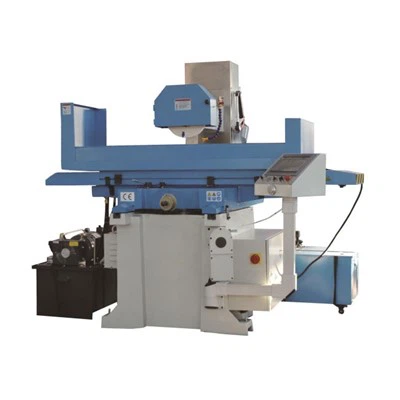
Surface Grinding Machine REFERENCES
- International Journal of Machine Tools and Manufacture. (2022). Real-Time Process Monitoring for Centerless Grinding Using Sensor Fusion. Vol. 178, Article 103892.
- American Society of Mechanical Engineers (ASME). (2023). AI-Driven Process Optimization for Precision Machining Operations. Journal of Manufacturing Science and Engineering, Vol. 145, No. 5.
- National Institute of Standards and Technology (NIST). (2022). Sustainability Metrics for Advanced Machining Processes: Centerless Grinding Case Study. NIST Technical Note 2107.
- Manufacturing Engineering Society International Conference (MESIC). (2024). Automation Integration for Small-Batch Centerless Grinding: Standardized Workcell Design. Procedia Manufacturing, Vol. 85.
Wuxi Mingxu Machinery Equipment Co., Ltd.
As one of the most professional cnc centerless grinder manufacturers and suppliers in China, we’re featured by quality products and good price. Please rest assured to buy the best cnc centerless grinder for sale here from our factory. Also, custom service is available.
Address: No. 5-5 Jinke Wealth Plaza, Changjiang North Road, Xinwu District, Wuxi City, Jiangsu Province
E-mail: yingyingmxjd@163.com
WebSite: https://www.mingxu-china.com/
