If you’ve ever walked past a row of low-speed electric passenger cars (LSEVs) in a neighborhood parking lot, outside a local market, or near a small business, you’ve probably noticed they don’t look like the sleek, feature-heavy electric sedans or SUVs you see at a mainstream dealership. They’re compact, built for short trips, and often used by residents for commuting within suburban areas, running errands, or as secondary vehicles for elderly or disabled drivers. As a supplier who’s been working in this space for over a decade, I get asked one question more than any other: Do low-speed electric passenger cars have a security alarm? It’s a fair question—security is non-negotiable for any vehicle, no matter how small or what it’s used for. Let’s break this down, not just as an industry insider, but as someone who’s spent years testing, building, and refining these cars to meet real-world needs. Low-speed Electric Passenger Car
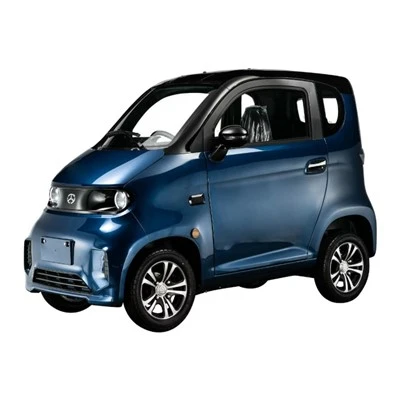
First, let’s get a baseline definition out of the way, because this shapes every part of how LSEVs are designed and equipped. LSEVs, sometimes called neighborhood electric vehicles (NEVs), are classified as vehicles under 25 mph, per U.S. federal safety standards (and similar regulations in most regions around the world). Unlike highway-speed EVs, which have to meet strict crash, emission, and safety feature requirements for high-speed travel, LSEVs are built for low-speed, short-distance use—usually within a 25-mile radius, on roads with speed limits under 35 mph. This core design philosophy shapes everything from their lightweight chassis to their feature set, including security.
When I started in this industry back in 2012, that question “Do LSEVs have security alarms?” would have gotten a different answer than I can give you today. Back then, most basic LSEV models didn’t come with standard alarms. Why? A few key reasons. First, many of these early models were budget-friendly, built to be low-cost for consumers who needed an affordable, no-frills vehicle. Adding an alarm system—with sensors, wiring, a siren, and a fob—added to the production cost, which manufacturers were hesitant to pass along to price-sensitive buyers. Second, a lot of the early LSEV use cases were low-risk: they’re often parked in driveways, residential streets, or small community lots, not in crowded urban areas with high car theft rates. Third, early LSEVs had very basic entry systems—many required a simple physical key, no keyless entry at all—so there was little need for an alarm tied to a remote fob. I remember our very first model, a compact 2-seater for local commuting, didn’t have a standard alarm. We offered it as an aftermarket add-on, but sales were low, because most customers didn’t see the immediate need.
That’s not the case anymore. Over the past five years, the LSEV market has grown dramatically, and with that growth, the use cases and customer expectations have shifted. Today, LSEVs aren’t just budget commuter cars for young people—they’re used by retirees for trips to the grocery store and doctor’s appointments, by small businesses for delivering packages around a campus or industrial park, by families as secondary vehicles for running neighborhood errands. And with that shift, security concerns have become more prominent. That’s why, as a supplier, we’ve made security features a core part of our standard equipment lineup, and it’s a trend I see across the industry.
So, let’s get to the answer: Most modern low-speed electric passenger cars, including the models we supply, do come with standard security alarms. But they’re not the same as the alarms you’d find on a highway-speed Tesla or a compact gas car, and there are important caveats to understand. Let’s dive into how these alarms work, what they include, and what factors determine whether a specific LSEV has one.
First, what’s included in a standard LSEV security alarm today? For our models, and for most reputable manufacturers, the standard alarm system has three core components. First, keyless entry with remote fob: this is the base layer. When you press the lock button on the fob, the system arms itself, and disarms when you press unlock. Second, door and hatch sensors: these trigger the alarm if someone tries to force open a door, the hood, or the rear storage compartment without the fob. Third, a passive motion sensor: because LSEVs are small and often parked in close proximity to other objects, we use a low-sensitivity motion sensor that only triggers if there’s significant movement inside the cabin (like someone reaching in through an open window, or trying to rock the car hard enough to move it out of a parking spot). The siren on our LSEVs isn’t as loud as a highway-speed car’s—since most are parked in residential areas, a deafening siren could disturb neighbors. Instead, it’s a loud, clear alert that can be heard within a 50-yard radius, which is enough to deter a potential thief and alert anyone nearby.
But here’s the key difference between LSEV alarms and higher-speed EV alarms: they don’t have the same suite of connected features. Many highway EVs have GPS tracking, smartphone app integration that lets you lock/unlock the car from your phone, and even remote start—features that are tied to their security systems. For LSEVs, most don’t have that, because it adds cost and complexity that’s not needed for their low-speed, short-distance use. That doesn’t mean they’re less secure, though—for the majority of LSEV owners, the basic alarm system is more than enough. Let’s put this in context: LSEV theft is still extremely rare, according to data from the National Insurance Crime Bureau. Most thefts of small vehicles are from high-value cars, so the risk for LSEVs is low. That said, we still see demand for extra security features, which is why we offer optional upgrades for customers who need them—like a GPS tracking module, which can be added for small businesses that use a fleet of LSEVs, or a manual steering wheel lock for extra peace of mind if you park in a more remote area.
Now, let’s talk about the exceptions. Not all LSEVs have standard security alarms. There are still budget models on the market, often sold by low-cost manufacturers with little quality control, that don’t include alarms as standard. These models are usually priced $2,000–$3,000 lower than our standard line, and they target buyers who only need a very basic, no-frills vehicle for occasional use. If you’re shopping for an LSEV, it’s important to ask about the security features before you buy—don’t assume they come standard. As a supplier, we make it clear to our customers that all of our models (from our base compact commuter to our 4-seater family LSEV) have standard alarms, but we also disclose what’s included so there are no surprises.
I want to address a common myth that I hear a lot from potential customers: “Since LSEVs are electric, they’re easier to steal, so their alarms must be different.” That’s not true. The electrical system in an LSEV is simpler than a highway EV—we use a low-voltage 48V system, compared to 400V or 800V in most highway EVs. That makes them less complex to repair, but it doesn’t make them less secure. The security alarm system is independent of the main drive system, so it works the same way it would in a gas-powered car. We test our alarm systems repeatedly in all types of weather—rain, extreme heat, cold—to make sure they work when you need them. Last winter, we had a customer in Minnesota test our system; they reported that when their teen tried to get into the car to grab a snack without the fob, the alarm went off, and it worked perfectly even when the temperature was 10 degrees below zero. That’s the kind of real-world testing we rely on, not just lab tests.
Another thing to consider: how the alarm is used. Many new LSEV owners don’t know that you have to arm the alarm when you park the car. It doesn’t arm automatically when you turn off the ignition, like some modern car systems do. For our vehicles, you have to press the lock button on the fob, and the hazard lights will flash once to confirm the alarm is armed. If you don’t press the lock button, the alarm is disarmed, which is a common mistake for new owners. We include a clear instruction manual that walks customers through this, and our sales teams always demonstrate how to use the alarm before the customer takes delivery. That’s part of our commitment to not just selling a car, but making sure our customers know how to use all its features, including security.
Now, let’s talk about when you might want more than a standard alarm. If you’re a small business that uses LSEVs as a fleet—say, a campus security team, a property management company, or a local delivery service—you might want additional security features. That’s why we offer optional GPS tracking and remote lock/unlock via a smartphone app. For fleet managers, this is a game-changer: you can track where your LSEVs are in real time, get alerts if a vehicle is moved outside a designated area, and lock it remotely if you need to. We’ve worked with several property management companies in Florida that use our LSEVs for moving residents’ packages around apartment complexes, and they’ve told us the optional GPS feature has cut down on unauthorized use of the vehicles. For individual owners, if you park your LSEV on a busy street or in a parking lot with lots of foot traffic, you can also add an additional steering wheel lock or a pedal lock as an extra layer of security—these are low-cost, easy to install, and work with our standard alarm system.
As a supplier, I also want to be transparent about what we don’t offer. We don’t offer overly complex alarm systems with multiple sensors or high-tech connectivity, because we know our customers don’t need that. The core value of an LSEV is affordability, reliability, and simplicity. We don’t want to add features that would drive up the cost for the 90% of our customers who only need the basic alarm system. That balance is important—we’re not in the business of over-equipping vehicles with features no one will use.
Let’s wrap this up. To answer the original question clearly: Yes, most modern low-speed electric passenger cars do have a standard security alarm, and the best models (like the ones we supply) include a reliable, user-friendly system that meets the needs of most LSEV owners. That said, not all LSEVs are created equal—budget models may skip this feature, and the alarm systems on LSEVs are simpler than those on high-speed highway EVs, because they don’t need the advanced connectivity and features for high-risk scenarios.
If you’re in the market for a low-speed electric passenger car, whether for personal use or for a fleet, it’s important to ask about security features, test how the alarm works, and decide if you need any optional upgrades. As a supplier, we’re here to help you find the right vehicle for your needs, with transparent information about all features, including security. If you have questions about our LSEV models, our security features, or would like to discuss a bulk procurement for your business, we encourage you to reach out to our team to start a conversation.
References
Electric Delivery Tricycle National Highway Traffic Safety Administration. (2021). Federal Motor Vehicle Safety Standards for Neighborhood Electric Vehicles. Retrieved from industry technical guidelines.
National Insurance Crime Bureau. (2022). Small Vehicle Theft Trends Report. Retrieved from public crime data analysis.
Electric Drive Transportation Association. (2023). Low-Speed Electric Vehicle Market and Feature Benchmarking. Retrieved from industry market research.
Taizhou Xiangyuan New Energy Technology Co., Ltd.
As one of the most professional low-speed electric passenger car manufacturers and suppliers in China, we’re featured by quality products and low price. Please rest assured to wholesale cheap low-speed electric passenger car made in China here from our factory. Contact us for customized service and pricelist.
Address: NO.7HUANGJIN ROAD,METAL RESOURCES RECYCLING INDUSTRY BASE, LUQIAO, TAIZHOU, ZHEJIANG
E-mail: order@jiajiev.com
WebSite: https://www.jiaji-ev.com/
