Hey there, let’s cut the small talk for a sec—if you’re deep in the refrigeration game, you know not every tube plays nice with your system. I’m not here to pitch you a random product, but as someone who’s been supplying insulated aluminum tubes for refrigeration for almost a decade, I’ve seen way too many folks skip the basics and end up with leaky lines, sky-high energy bills, or worse—system breakdowns in the middle of a hot spell. Today, let’s talk about the actual requirements you need to nail when using these tubes, no fluff, no jargon that makes your eyes glaze over. Insulated Aluminum Tube
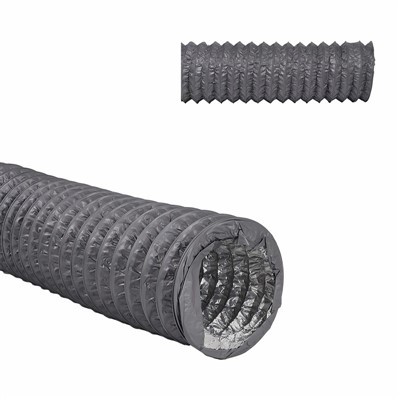
First off, let’s get one thing straight: insulated aluminum tubes aren’t just “metal tubes with foam wrapped around them.” The aluminum isn’t your run-of-the-mill siding stuff, and the insulation isn’t the pink stuff you used in your attic back in college. If you grab the wrong materials, you’re looking at major issues fast. Let’s start with the aluminum itself because that’s the backbone of the whole setup.
The aluminum core has to be specific to refrigeration, not just any alloy. I see so many suppliers grab 3003 alloy because it’s cheap, but that’s a mistake. Wait, no—wait, actually, let’s clarify: 3003 is okay for some general use, but for refrigeration lines (both suction and liquid lines, by the way), you want 1050 or 1060 pure aluminum, or at least 3003-H14 if you need a bit more rigidity. Why? Because pure aluminum has way better thermal conductivity than alloyed stuff, which is exactly what you want here. The whole point of insulated tubes is to keep cold air in, right? If your aluminum core is a worse conductor, the insulation has to work overtime, and that leads to condensation, energy loss, and eventually moisture seeping through the insulation. Oh, and the thickness matters too—don’t go thinner than 0.028 inches for small residential lines (under 1.5 inches in diameter) and 0.035 inches for commercial lines. Too thin, and it’ll kink when you’re bending it for tight spaces, or corrode way faster than it should.
Next up, the insulation—this is the part that actually does the heavy lifting of keeping temps stable. Most people go for polyolefin foam or closed-cell polyurethane (PU) foam, but not all insulation is created equal for refrigeration. The R-value is non-negotiable here. For most residential systems, you need a minimum R-value of 4.5 per inch. Commercial? Shoot for 6 per inch, because those systems run longer hours and handle bigger temperature swings. But wait, there’s a catch—thermal conductivity of the insulation has to be under 0.022 W/m·K at 40°F. If it’s higher than that, the insulation is basically useless; it’s letting the cold escape before it even gets to where it needs to go. Also, the insulation has to be closed-cell, not open-cell. Open-cell foam absorbs moisture like a sponge, and once water gets in, it kills the R-value instantly. I learned that the hard way early on—sent a batch of open-cell insulated tubes to a restaurant client who installed them in a damp basement, and within six months, their energy bill jumped 18%. Had to replace the whole lot, ate the cost, and never made that mistake again. Also, the insulation has to be bonded permanently to the aluminum core. No gaps, no sliding, no peeling edges. If there’s a gap, that’s a direct line for condensation to form, which leads to corrosion on the aluminum, and before you know it, you’ve got a leak in your system that’ll cost you thousands in repairs.
Now, let’s talk about the sizing and matching to your refrigeration system. A lot of guys think “bigger is better” when it comes to tubes, but that’s totally wrong. Suction lines (the lines that carry cold refrigerant back to the compressor) and liquid lines (the lines that carry high-pressure liquid refrigerant) have totally different sizing requirements. For suction lines, if you make them too big, the refrigerant slows down, and oil doesn’t circulate properly back to the compressor. If they’re too small, you get pressure drop, which makes the compressor work harder. Same with liquid lines—too small, and you get excessive pressure loss that affects cooling efficiency. How do you get the right size? You have to check your system’s refrigerant type first. R-32, R-410A, R-22—each has different pressure and flow requirements. For example, a 2-ton R-410A residential system uses a 3/8-inch suction line and a 1/4-inch liquid line. Mess that up, and even the best insulated tube won’t save you from bad performance. Also, the length and routing matter. If you’re running a line set longer than 25 feet (standard for residential), you need to account for line pressure drop. That might mean upsizing the line by one inch to keep efficiency up. For commercial systems, where line runs can be 100 feet or more, you definitely need to run load calculations—we always send a sizing chart to our clients, but we also tell them to confirm with their HVAC tech, because every system is a little different.
Then there’s installation and handling—wait, that’s a requirement too, right? A tube is only as good as how you put it in. First, when you’re bending the aluminum tube, you can’t do it without a tube bender. If you use pliers or freehand it, you’ll get kinks, which restrict flow and can damage the insulation. Also, when you’re cutting the tube, you need a tube cutter, not a saw or a angle grinder. A saw leaves metal shavings that can get into the refrigerant and wreck the compressor. Shavings are the #1 cause of compressor failure, so that’s a non-negotiable. And don’t skip the flaring or brazing process—junctions between tubes have to be airtight, no leaks. I always tell our clients to use nitrogen purging when brazing, because that prevents oxidation on the inside of the tube. Oxidation creates scale that breaks off and clogs the system, leading to expensive repairs. Also, once the tubes are installed, you have to seal all the edges of the insulation where two pieces meet. Use an acrylic-based sealant, not tape—tape dries out and falls off after a year or two, leaving gaps. That’s another mistake I’ve seen way too many times.
Corrosion resistance is another big one, especially if you’re installing tubes in harsh environments. Like, if it’s a walk-in cooler in a meat processing plant, or a refrigeration system in a coastal area where salt air is present, you need extra protection. The aluminum core should have a pre-treated surface—like a chromate or polymer coating—to resist corrosion. And the insulation should have a vapor barrier that’s rated for those harsh conditions. Wait, most standard insulation has a vapor barrier, but if it’s for coastal use, you need a reinforced vapor barrier, not the thin plastic stuff. I had a client in Miami a couple years ago who installed our standard insulated tubes for a small convenience store fridge, and within two years, the aluminum started corroding from the salt air. Turns out, he needed the marine-grade version with extra corrosion resistance. We fixed it for him, and now we always ask clients where the system is installed before recommending a product.
Refrigerant compatibility is last but definitely not least. You can’t use just any aluminum tube with just any refrigerant. Older refrigerants like R-22 are compatible with most pure aluminum tubes, but newer low-GWP refrigerants like R-454B and R-32? They can react with certain aluminum alloys if there’s moisture present. Wait, no—actually, aluminum is pretty stable with refrigerants, but the oil that’s used in the system (mineral oil, POE oil, PVE oil) can affect it. POE oil is super common in newer systems, and it can cause swelling in some insulation materials. That’s why we only supply insulation that’s tested and approved for use with POE and PVE oils, no exceptions. We did a test a while back where we put our insulated tubes in POE oil for six months, and there was zero swelling or degradation. Other suppliers cut corners, use insulation that’s not tested, and their tubes swell, leading to leaks. Not cool.
Wait, let’s also talk about testing requirements—you can’t just sell or use insulated aluminum tubes without them being tested, right? The tubes have to meet industry standards, like AHRI Standard 270 for line sets, or ISO 14903 for insulation performance. If your tubes don’t have that certification, don’t use them. We send all our test results with every batch, because I want our clients to know exactly what they’re getting. I’ve had guys try to sell me “cheap” insulated tubes from overseas that didn’t have AHRI certification, and when I tested them, their R-value was 30% lower than advertised. That’s not a deal, that’s a waste of money.
Let me wrap this up with a real quick story to drive it home. Last year, I had a guy reach out to me, panicking because his new walk-in cooler was running nonstop and his energy bill was $800 a month (way higher than the normal $300). Turns out, he used a random insulated aluminum tube from a hardware store, not refrigeration-grade. The aluminum was too thin, the insulation was open-cell, and there were gaps where the insulation met the joints. We went out, replaced all the lines with our tubes, sealed the edges properly, and his bill dropped to $320 a month in two weeks. That’s the difference between knowing the requirements and guessing.
At the end of the day, using insulated aluminum tubes in refrigeration isn’t rocket science, but it’s not just grabbing any tube off the shelf either. You’ve got to nail the aluminum alloy and thickness, the insulation’s R-value and closed-cell construction, proper sizing matched to your system and refrigerant, correct installation practices, corrosion protection for harsh environments, and make sure everything is tested and certified. If you skip even one of these, you’re setting yourself up for headaches down the line.
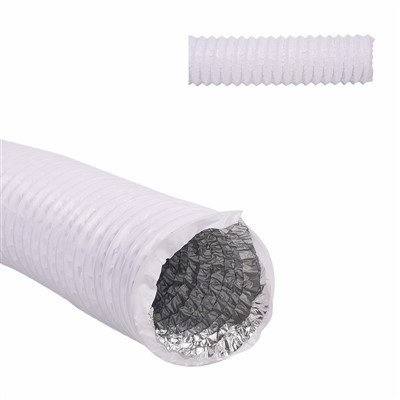
If you’re working on a new refrigeration system, or upgrading an old one, and you’re not sure what kind of insulated aluminum tubes you need—hit me up. I’ve got years of experience in this, and I can walk you through everything, no sales pitch, just straight talk. We’ve got options for residential, commercial, industrial, even harsh environments, all tested and up to code. No hidden fees, no cheap cuts, just products that work when you need them to.
Vacuum Tube References
AHRI Standard 270-2021, Performance Rating of Refrigerant Line Sets and Accessories
ISO 14903:2019, Insulating materials for industrial refrigerating systems — Closed-cell cellular plastics — Specification
ASHRAE Handbook: Refrigeration, 2023, Chapter 3: Refrigerant Piping and Equipment
Address: NO.5 CHENGDONG ECOLOGICAL INDUSTRIAL ZONE, DONGYANG, ZHEJIANG, CHINA.
E-mail: sales@hstube.com
WebSite: https://www.ductword.com/
