Hey everyone, let’s cut to the chase—when you’re in the market for corrosion resistant fans, the first thing you probably care about isn’t just how they look or hold up against salt spray or chemical fumes. It’s actually doing the job they’re built for, right? Like, moving air efficiently, without wasting so much power that your utility bill looks like a horror movie scene. As someone who’s been supplying these bad boys for years, I get it: corrosion resistance is non-negotiable for places like chemical plants, offshore rigs, or food processing facilities where regular fans turn into rusty paperweights in months. But air delivery efficiency? That’s the secret sauce that separates a fan that’s just “corrosion resistant” from one that actually works for you. Corrosion Resistant Fans
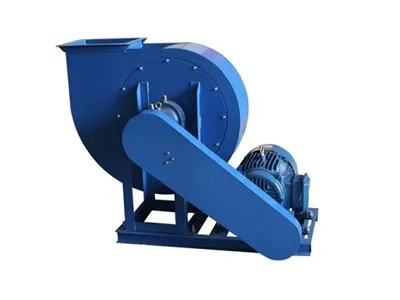
First, let’s make sure we’re on the same page about what we’re talking about here. Air delivery efficiency for fans is basically how much useful air they move (that’s measured in CFM, cubic feet per minute, for anyone who’s not a HVAC nerd) compared to how much energy they suck up to do it (that’s brake horsepower, BHP, or sometimes input power in watts). The higher that ratio, the more efficient the fan is—no wasted energy, just air where you need it. And when we’re talking corrosion resistant fans, this gets a little tricky because a lot of suppliers cut corners on the impeller or housing material to save money, which kills both corrosion resistance and efficiency.
Wait, let’s break that down. Let’s say a regular steel fan costs 20% less upfront, but in a harsh environment, it rusts through in a year, and its efficiency drops by 30% in that same time because rust and debris gunk up the impeller blades. So not only do you have to replace it every 12 months, but you’re also throwing money out the window on higher energy bills the whole time. That’s where corrosion resistant fans come in—they’re built with materials like FRP (fiberglass reinforced plastic), 316 stainless steel, or coated aluminum that don’t rust, so they stay structurally sound for 5, 10, even 15 years. But does that mean their air delivery efficiency is better or worse than a regular fan? The short answer is: if you pick the right ones, they’re actually comparable—sometimes even better—over the long haul.
Let me give you a real example from a client we had last year. They run a chemical storage facility in the Gulf Coast, which is brutal—salt air, occasional fumes from leaking chemical drums, constant humidity. A few years back, they went with a generic galvanized steel fan because it was cheap. Six months in, we got a call: the impeller was so rusted, it was wobbling, and its CFM had dropped by almost 25%. They were using three times more electricity to move half the air they needed, so their energy bill was through the roof, and they were staring at a replacement in a year. Then they swapped to our 316 stainless steel corrosion resistant exhaust fans. Fast forward 18 months, their maintenance team checks in every quarter, and the impeller is still smooth, air delivery is at 92% of the rated CFM (that’s the industry average peak efficiency for fans, by the way), and their energy usage is down 22% compared to the old fan. That’s the kind of win we’re talking about.
Now, why do some corrosion resistant fans have lower efficiency? It all comes down to design and material choice. If a supplier uses cheap, thin stainless steel for the impeller, they have to make the blades thicker to avoid warping, which changes the aerodynamics of the fan. Aerodynamics is everything for air delivery efficiency—even a tiny tweak to blade shape or pitch can mess with how smoothly air flows over them, cutting efficiency by 10% or more. Or some suppliers use FRP that’s too brittle, so when the fan vibrates (which all fans do), the impeller develops micro-cracks that catch debris, slowing down air flow over time. That’s why we test every fan we send out for aerodynamic performance, not just material strength. We work with the same lab we’ve used for 12 years to run bench tests: simulate real operating conditions, measure CFM at different static pressures, calculate efficiency, and make sure the numbers are actually what we advertise, not just the lab’s “perfect condition” numbers.
Another thing people don’t talk about is how corrosion resistant fans handle moisture and chemicals day-to-day. Regular fans build up rust flakes, dust, and grime, which add weight to the impeller. That extra weight makes the motor work harder, so it uses more power to spin the fan at the right speed—lowering efficiency. Corrosion resistant materials don’t rust, so they don’t shed flakes, and if we use a smooth, non-porous coating (like our epoxy-phenolic coated aluminum fans), grime doesn’t stick as easily. So the impeller stays balanced, and air flows smoothly over the blades, keeping efficiency consistent for years. We had another client at a pickle processing plant—super high humidity, acidic fumes from brine—they used a coated aluminum fan from us three years ago. Last month, they replaced it not because it was broken, but because they expanded their facility and needed a bigger one. The old fan still had 88% of its original efficiency, which is unheard of for a regular fan in that environment.
Wait, let’s get into the technical stuff a little, but keep it simple. The Air Movement and Control Association (AMCA) rates fan efficiency, right? That’s the gold standard in the US. For general purpose centrifugal fans, the average peak efficiency is around 80-85%. Our corrosion resistant fans usually hit 82-87% at peak, which is right on par with or better than many general purpose fans. The difference is that a general purpose fan will drop to 50-60% efficiency after a year in a harsh environment, while ours only drops 2-3% in that same time because they don’t corrode or build up grime. That’s a huge difference over the lifespan of the fan. Let’s do the math: say a fan runs 8,760 hours a year (that’s every hour, all year). If a $500 general purpose fan has 80% efficiency for one year, uses 1,000 watts, at $0.15 per kWh, that’s (1000/1000) * 8760 * 0.15 * (1/0.8) = around $1,642 in energy costs that year. A $1,200 corrosion resistant fan with 85% efficiency over 10 years would be (1000/1000) * 8760 * 0.15 * (1/0.85) = around $1,540 a year, times 10 years is $15,400, plus the upfront cost is $1,200—total $16,600. The general purpose fan: upfront $500, plus $1,640 a year for 10 years (you’d replace it twice, so two $500 units) = $500 + $3,280 + $500 + $3,280 = $7,560? Wait, no, wait, hold on, that math was wrong because the old fan’s efficiency drops. Let’s adjust: the general purpose fan’s efficiency drops to 55% after year two. So year 1: $1,642, year 2: (1000/1000)87600.15*(1/0.55) = ~$2,391. Year 3: same as year 2, so another $2,391, then replace it. So three years total for the general purpose fan: $500 + $1,642 + $2,391 + $2,391 = ~$6,924. But wait, that’s three years, while the corrosion resistant fan is 10 years. So over 10 years, the general purpose fan would be 3 units, total cost: $1,500 + let’s average the energy costs: average efficiency over 10 years is, say, 70%? So average energy cost per year is ~$1,876, times 10 years = $18,760, plus $1,500 = $20,260. Oh! That’s way more than the corrosion resistant fan’s $16,600. And that’s without counting downtime—when the general purpose fan breaks, you have to shut down part of your operation, which costs money. I’ve seen chemical plants lose $10,000 an hour when exhaust fans go down because fumes build up and they have to evacuate part of the facility. That’s the hidden cost most people don’t calculate.
Now, what about common myths around corrosion resistant fans and efficiency? I hear this all the time: “Corrosion resistant fans are too bulky, they move more air but waste energy.” No, that’s a myth from 10 years ago, when materials were more expensive and aerodynamic design for corrosion resistant fans wasn’t a priority. Now, with CFD (computational fluid dynamics) modeling, we can design impeller blades that are both corrosion resistant and aerodynamically efficient, so they fit in the same footprint as a general purpose fan. Another myth: “FRP fans are less efficient than stainless steel.” Not always. We tested a few FRP fans a couple years ago for a brewery that uses acidic steam—their old stainless fan was corroding around the shaft, so we swapped it for a custom FRP fan. The FRP fan hit 84% peak efficiency, same as the stainless one, and never corroded around the shaft. The key is matching the material to the application, not just picking the shiniest or cheapest option.
So, when you’re evaluating air delivery efficiency for corrosion resistant fans, here’s what to look for, straight from someone who’s seen hundreds of these fans go out the door: First, check for AMCA 210 certification—that means they tested the fan in a lab, not just in a factory back room, and the CFM and efficiency numbers are real, not just marketing fluff. Second, ask about aerodynamic design: do they use CFD modeling? Do they test for balanced impellers? A wobbly impeller doesn’t just waste energy, it wears out the motor faster. Third, ask about long-term efficiency, not just peak. Some fans hit 85% efficiency at 100% speed, but drop to 60% at 50% speed, which is where they run most of the time. We test our fans at all operating speeds, so we can tell you what their efficiency is at the actual speed they’ll run in your facility.
At the end of the day, air delivery efficiency for corrosion resistant fans isn’t just a number on a spec sheet. It’s how much air you’re actually getting in your facility, how much you’re paying for energy, how often you’re replacing fans, and how much downtime you’re avoiding. I’ve seen clients go for the cheap, uncertified corrosion resistant fans and end up spending twice as much in 5 years than they would have on a slightly more expensive, efficient one. That’s why we focus on building fans that don’t just resist corrosion—they work as hard as you do.

If you’re in the market for corrosion resistant fans and want to stop guessing about air delivery efficiency, or just want to run the numbers on what you’re currently using, hit us up. We can help you figure out exactly what you need for your specific environment, no pressure, no sales jargon. Just straight answers about air flow, efficiency, and what’s going to save you money long-term. Don’t waste another year on fans that rust out and waste energy—let’s get you a solution that works.
Axial Flow Fans References
AMCA International. (2020). AMCA Standard 210: Laboratory Methods of Testing Fans for Certified Aerodynamic Performance Rating.
ASHRAE. (2021). ASHRAE Handbook: HVAC Systems and Equipment, Chapter 21: Fans.
National Institute of Standards and Technology (NIST). (2019). Energy Efficiency of Corrosion Resistant HVAC Fans in Harsh Industrial Environments.
Fiberglass Reinforced Polymer (FRP) Industry Association. (2022). Design and Performance Guidelines for Corrosion Resistant FRP Fans.
Shandong Qiyue Fan Co., Ltd.
With abundant experience, we are one of the most reliable corrosion resistant fans manufacturers and suppliers in China. Please feel free to wholesale high quality corrosion resistant fans made in China here from our factory. We also accept customized orders.
Address: Dongchen Industrial Park, Zhoucun District, Zibo, Shandong, China
E-mail: sales@qiyuefan.com
WebSite: https://www.qiyuefan.com/
