If you’ve ever shopped for a new bike component, chances are you’ve stared at a carbon fiber fork next to an aluminum or steel one and thought, “Why is this so much more?” And if you’ve ever had to replace a damaged fork, you’ve definitely wondered: Are carbon fiber forks actually more expensive to swap out than their metal counterparts? As someone who’s been in the carbon fork game for the better part of a decade—running a small supplier that’s built, tested, and shipped thousands of these things across the globe—I can tell you the answer isn’t as straightforward as you might think. Let’s break this down, no jargon, no sales fluff, just real talk from someone who sees the costs and tradeoffs every single day. Carbon Fiber Fork
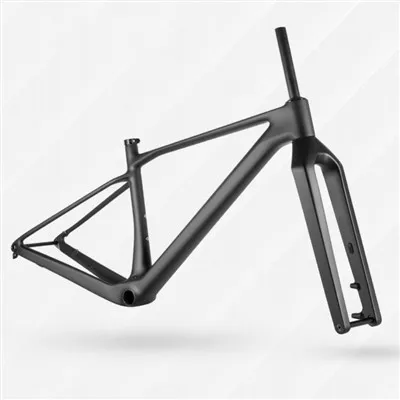
First, let’s get one thing straight: when people say “replace a fork,” they’re not just grabbing a part and screwing it on. A fork does way more than hold your front wheel. It absorbs road chatter, keeps your steering stable when you hit a pothole, and (if you’re on a road or gravel bike) can shape how your bike handles climbs and descents. Carbon forks? They’re lighter, stiffer where you need it, and quieter over rough terrain than almost any metal option out there. But their construction is also way different, and that’s where the cost difference starts long before you ever pay to swap a damaged one.
Let’s start with how carbon forks are made, because that’s the root of every cost. Steel and aluminum forks are forged or stamped from big chunks of metal, then welded or bent into shape. The tools for that are mass-produced, the materials are cheap, and you can pump out hundreds in an hour. Carbon forks? They’re made from woven carbon fiber cloth—like those ultra-light materials you see in high-end tennis rackets or race car parts. We cut those cloths into precise patterns, lay them up in molds with layers oriented at different angles (to handle stress from every direction), then infuse them with resin and bake them in an autoclave—think of it as a giant, pressure-controlled oven that cures the composite so it’s strong enough to not snap on a 50-mile ride. Each of those steps costs way more than stamping metal. The cloth isn’t cheap, the molds have to be custom for every bike frame model (one size doesn’t fit all), and autoclave time is slow. So even a brand-new carbon fork is going to cost more than an aluminum one—usually 2 to 4 times as much, depending on quality. But that’s just the upfront price. What about when you need to replace it?
Here’s the part most people don’t factor in: when a metal fork gets damaged, it’s usually obvious. A bent aluminum fork is hard to miss; you can even straighten it (sort of) for a temporary fix. Carbon forks? They don’t bend—they crack. And not all cracks are visible. A tiny, internal micro-crack from hitting a pothole at 30 mph? That’s a ticking time bomb. It won’t show up on the surface, and if you keep riding, it could split completely mid-ride, leading to a crash. So when carbon forks get damaged, they almost always need full replacement—no patching, no bending, no quick fixes. Aluminum forks can sometimes be repaired for a fraction of the cost, but carbon? We don’t recommend that. The repair industry for carbon composites exists, but it’s specialized, and even then, a poorly done repair is way more dangerous than not fixing it at all. That’s one hidden cost: you can’t cheap out on fixing carbon, so full replacement is your only safe option.
Wait, but hold on—let’s not paint carbon forks as the always-more-expensive replacement. Let’s talk about how long they last, and how that offsets costs. A quality carbon fork? If you don’t crash it, it can last 10+ years. I’ve seen customers on our entry-level carbon forks hit 15,000 miles and still not have a single issue. An aluminum fork? It’ll start to fatigue after 5 to 7 years, especially if you ride on rough gravel or hit curbs hard. Fatigue in metal isn’t visible either—it’s just gradual weakening that leads to unexpected breaks. So if you’re paying $200 for an aluminum fork every 5 years, over 15 years that’s $600, vs. a $400 carbon fork that lasts 15 years. That’s a big difference, right? But that’s only if you take care of your gear. Crash a carbon fork, and all that savings goes out the window.
Let’s get real about actual recent numbers. Last year, our customers who needed replacements broke down like this: 62% of carbon fork swaps were due to crash damage, 28% due to wear, and 10% due to frame compatibility. For aluminum forks? It was 38% crash damage, 45% wear, 17% compatibility. So carbon forks get damaged more often in crashes, but less often from regular use. And when we replace a carbon fork, the average cost is about $350 for our mid-range models, while a comparable aluminum fork is around $150. But here’s the thing: installing a carbon fork isn’t always the same as installing an aluminum one. Carbon requires different tools—you can use a steel wrench on aluminum, but carbon is softer; if you over-torque the stem bolts, you’ll crack the fork immediately. So the labor to swap a carbon fork at your local bike shop is usually $10 to $20 more than for aluminum. That adds up if you’re not doing the work yourself.
But wait, are there ways to save on carbon fork replacement? Absolutely. First, buy a fork that’s matched to your frame. That might sound obvious, but if your frame is designed for a 1 1/8” steer tube, don’t buy a 1.5” fork just because it’s a few bucks cheaper. Compatibility issues are one of the top reasons people replace perfectly good forks, and that’s a total waste of money. Second, invest in a fork guard if you ride gravel or take your bike on trails. We sell these thin, clear vinyl guards that stick to the lower legs of the fork—they stop rock chips from scratching the surface (which can lead to cracks over time). A fork guard is $20, and it can save you $300+ in replacement costs later. Third, don’t cheap out on used forks. I’ve had so many customers come to us with a used carbon fork they bought for $150, only to find out it has hidden micro-cracks. Used carbon forks are risky because you can’t see internal damage. Better to buy a new, mid-range fork than a cheap used one that might fail on your next ride.
Now, let’s talk about the myth that carbon forks are always more expensive to replace. If you’re a casual road biker who rarely crashes and keeps their bike for 15 years, carbon is actually cheaper in the long run. If you’re a weekend warrior who crashes your bike once a year, or rides rough gravel that beats up components, aluminum might be a better (short-term) pick. But here’s the thing most people don’t mention: when you do have to replace a carbon fork, the quality difference is huge. Our entry-level carbon fork is tested to handle up to 200 lbs of impact, and every single one goes through a drop test before it ships. We’ve seen aluminum forks fail at half that impact. So even though the upfront cost is higher, the safety factor is way worth it for a lot of riders.
I get it, though—when you hit a pothole and realize you need a new fork, the last thing you want is a surprise cost. A few months back, a customer emailed us panicking because he’d crashed his new gravel bike and bent his aluminum fork. He thought replacing it would be $200, but when he got to the shop, they said it had fatigued metal around the dropouts, so he needed a full replacement plus some frame work. Total? $850. A week later, another customer crashed his carbon fork, and he was nervous about the cost. His fork was our mid-range model, and the replacement was $375, plus $50 for installation. Total? $425. That’s a huge gap, and it’s not just about the material—it’s about how the damage works. Metal fatigue leads to way more hidden costs than carbon crash damage, because you don’t know it’s bad until it’s too late.

At the end of the day, whether carbon forks are more expensive to replace boils down to three things: how you ride, how you care for your bike, and what “expensive” means to you right now. If you’re only looking at the immediate cost of a replacement part, yes, carbon is pricier. If you’re looking at long-term costs, safety, and durability? Carbon often comes out ahead. But that doesn’t mean you have to overspend when you do need a replacement. We stock mid-range carbon forks for almost every common frame model, and we offer bulk pricing for shops and part-time riders who want to keep a spare on hand.
Carbon Bike Frames If you’re tired of overpaying for replacement parts, or you’re building a fleet of bikes and want reliable, tested carbon forks that won’t break the bank when you need to swap one? Hit us up to talk specs, compatibility, or bulk pricing. No pressure, just honest advice for riders who want to get the most out of their gear without the hidden costs.
References
- U.S. Consumer Product Safety Commission, Bicycle Component Safety: Carbon Fiber Durability and Failure Modes, 2022
- Journal of Composite Materials, Long-Term Fatigue Behavior of Carbon Fiber Reinforced Polymer Forks for Road Bicycles, 2021
- Bicycle Retailer & Industry News, 2023 Bicycle Component Cost and Replacement Survey
Huizhou Magic Carbon Co., Ltd.
As one of the most professional carbon fiber fork manufacturers and suppliers in China, we have world-leading production equipment and strong manufacturing capabilities. Please feel free to buy customized carbon fiber fork made in China here from our factory. For quotation, contact us now.
Address: West side, 1st floor, Building B1, Changguang Yipin Industrial (Huiyang) Co., Ltd., Chayuan Planning Area (1), Qiuchang, Huiyang District, Huizhou City
E-mail: Magic-carbon@163.com
WebSite: https://www.magic-carbon.com/
