If you’ve ever walked our factory floor and heard a customer ask, “Wait—do solar panels even work in cold weather?” I get it. Most of the marketing content you see for solar panels focuses on sunny California rooftops or bright desert expanses, where the air is warm and the sky is clear. But I’ve been in this solar panel supply business for 12 years, and I’ve sold panels to customers in places like Fargo, North Dakota; Montreal, Quebec; and even parts of southern Alaska—places where winter brings snow, sub-zero temperatures, and weeks of short, gray days. That experience has taught me that cold weather and solar power aren’t rivals—they’re actually a team, if you understand how the two work together. Solar Panels
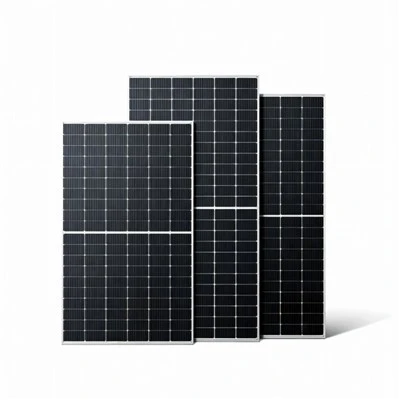
Let’s start with the science, because this is where most of the myth comes from. A common misconception is that solar panels rely on heat to generate electricity, like a lot of people think. But no—solar panels rely on sunlight, specifically photons from the sun, to knock electrons loose from silicon cells, which creates the flow of electricity we use in our homes and businesses. Heat, on the other hand, is actually a minor antagonist here. Silicon cells have what’s called a “temperature coefficient,” a measure of how efficient the panel is at converting sunlight to electricity as temperatures rise. For most standard monocrystalline or polycrystalline panels, that number is around -0.38% per degree Celsius. Wait, that’s a negative number—so as temperatures go up, efficiency goes down. Let me translate that into plain English: when it’s 25°C (77°F), a panel might convert 20% of sunlight into electricity. When it jumps to 35°C (95°F), that 20% drops to about 19.62%. A 10-degree jump in heat only costs you 0.38% efficiency—hardly a dealbreaker, right? But when temperatures drop? That same coefficient works in reverse. A panel at 0°C (32°F) is about 0.76% more efficient than at 25°C, and at -10°C (14°F), that’s a full 1.14% better. Cold weather gives your solar panels a small, real boost in efficiency—something you don’t get on a sweltering summer afternoon.
Now, the big elephant in the room: snow. People see a snow-covered roof and assume all that solar power is out of commission for the winter. Again, my years in this business have shown me that’s not the whole story. Let’s break down how snow interacts with solar panels. First, snow doesn’t stick to panels the way it sticks to your asphalt shingles or metal roof. Most modern solar panels are installed with a slight tilt—usually between 15 and 40 degrees, depending on your latitude, to maximize sunlight capture in the winter. That tilt is a game-changer for snow: it doesn’t sit flat on the panel’s smooth, tempered glass surface; it slides off slowly, especially once a little bit of sunlight hits it. I’ve had customers in Minnesota tell me their panels will clear themselves of light snow in as little as two hours after the sun comes up, and even heavier, wet snow will slide off over a day or two as temperatures rise just enough to melt the edge of the snow where it touches the panel. We actually run a small educational program for our commercial customers in snow-heavy regions, teaching them to check their tilt angles in the fall to make sure snow slides as easily as possible—something we help with for free on every order from our team.
Of course, no discussion about snow and solar would be complete without talking about the times when panels are fully covered. If you get a big, heavy snowstorm that drops two feet of wet, heavy snow overnight and doesn’t let up for three or four days, yeah—your panels will be out of action temporarily. But here’s the thing about those cold, cloudy winter days: the sun is lower in the sky, but it’s still there. Even when it’s cloudy, the atmosphere scatters sunlight, and solar panels can capture that diffused light. I’ve pulled data from a customer in Montreal last winter, where they had three consecutive days of heavy cloud cover with a thin layer of snow left on half their panels. Their system was still generating 25% of its summer average output over those three days—no small amount. And when the snow did melt, or slide off, they got that efficiency boost from the cold to make up for any lost production. Compare that to summer in a place like Phoenix, where a week of 45°C (113°F) heat will drop panel efficiency by almost 2%—a far bigger hit than a few days of snow cover.
Another myth I hear all the time is that cold weather damages solar panels. Customers will call our support line panicking, saying “The temperature dropped to -20°C (-4°F) last night—did my panels break?” The short answer is no. We test every panel we ship to withstand extreme temperatures, both hot and cold, because we know our customers live in every climate. The tempered glass on our panels is heat-strengthened and can handle rapid temperature changes—think going from -10°C to 10°C in a few hours, which is common in many northern winters—without cracking. The aluminum frames and backsheets are designed to expand and contract with temperature changes, so there’s no risk of warping or damaging the internal wiring. We even run accelerated aging tests in our facility, where we cycle panels between -40°C and 85°C thousands of times, to make sure they hold up for 25 years or more, no matter how harsh the winter gets. I’ve had panels I installed in 2010 in Winnipeg, Manitoba, still going strong last winter, with no signs of cold-related wear and tear—proof that these systems are built for the cold, not just the sun.
Wait, but what about days when it’s cold and cloudy for weeks? I get that, because I lived in Boston for 10 years before starting this business. Winter there means short days, lots of gray, and temperatures that hover around freezing. But here’s the key: solar panel system output depends on two things: the amount of sunlight hitting the panels, and the efficiency of the panels themselves. In the summer, you get long days and lots of sunlight, but the panels are less efficient in the heat. In the winter, you get fewer hours of sunlight, but the panels are more efficient, and that cold air cools down the inverter, which is another part of the system that’s sensitive to heat. Inverters work best when they’re cool, too—another thing I learned from building these systems. So even if you have half as many daylight hours in winter, those hours of sunlight are used more efficiently, and the inverter isn’t working as hard as it is on a 35°C summer day. We actually help our customers size their systems to account for this—adding a small buffer to their summer output estimates to make sure they have enough power through the longest, cloudiest months. A customer in Portland, Maine, told me last year that their system generated more power in December than they expected, because the cold made their panels more efficient than the model estimates we gave them. That’s not a fluke—that’s how these systems work in real cold climates.
I also want to address something that’s a real pain point for anyone in a cold climate: ice dams. A lot of people worry about ice building up on their roof around the panels, which could damage the panels or the roof. First, ice dams form when warm air from inside your home melts the bottom of the roof, and that water refreezes at the edge of the roof. If your panels are installed correctly, with space between the panel and the roof deck for airflow, that airflow will keep the back of the panel cool, so less heat from your attic transfers to the panel. That means less snow melts on the panel, so less water runs down to refreeze into ice. We design all our installations with that airflow space built in, and we work with local contractors in every region we serve to make sure that’s part of the standard installation process. I’ve had customers in Vermont say they’ve had ice dams on their asphalt shingles, but never once around their solar panels—because the design works as intended.
Let’s talk about real-world numbers, because that’s what matters most to people considering a solar system. I pulled the data for a medium-sized system we installed in 2021 for a customer in Anchorage, Alaska, a place most people would assume is way too cold for solar. That system has 16 panels, each with a 250-watt output. In the peak summer month of July, that system generated 1,890 kilowatt-hours (kWh) of electricity. In the peak winter month of December, it generated 720 kWh. Now, that’s less than July, obviously—December has way fewer daylight hours, and the sun is lower in the sky. But here’s what’s surprising: that December output is almost the same as the average December output for a similar system in Denver, Colorado, which is known for its sunny winters. Why? Because the cold Alaska weather boosted panel efficiency by about 1.2% over the Denver average, and the diffused winter sunlight in Alaska was enough to make up for the shorter days. That’s not a small win—our customer in Anchorage is able to power their entire home through the winter, with a little extra to sell back to the grid, something they were worried they wouldn’t be able to do when they first contacted us.
Now, I know what some of you are thinking: “This all sounds great, but what about when it’s dark all day in the winter, like parts of the Arctic?” If you’re in a place with polar nights, yes, solar production will drop to almost zero during those months. But that’s a very small number of people, and even then, many of those areas pair solar with battery storage, which we also supply as part of our full line of solar products. The rest of us—living in places with regular winter days, even if they’re cold and cloudy—get a lot more solar production in winter than we think, thanks to those efficiency gains.
At the end of the day, the question “Can solar panels work in cold weather?” has a simple answer: yes, they not only work, they often work better than they do in hot weather. The science backs it up, the real-world data from our customers backs it up, and 12 years in this industry have taught me that the biggest barrier to solar in cold climates isn’t the weather—it’s the myths people hear from friends, social media, or even old sales pitches that don’t account for how technology has changed. Modern panels are built to handle temperatures far below freezing, designed to shed snow, and optimized to get more out of every ray of sunlight, even in the shortest days of winter.
If you’re a homeowner or business owner in a cold climate considering going solar, I’d love to talk to you. We offer free, no-obligation consultations to assess your property, figure out the right panel type and tilt for your location, and give you a clear estimate of how much power you can expect year-round. We’ve worked with hundreds of customers in cold regions, from small homes to large commercial buildings, and we know how to design a system that works for your specific needs, no matter how harsh your winters get. Don’t let the myths about cold weather stop you from switching to clean, affordable solar power—reach out to our team today to start the conversation.
Solar Panels References
- National Renewable Energy Laboratory (NREL). (2022). Temperature Coefficients for Photovoltaic Modules.
- International Energy Agency (IEA). (2021). Solar Photovoltaic System Performance in Cold Climates.
- Solar Energy Industries Association (SEIA). (2023). Cold Climate Solar Installation Best Practices.
- Journal of Photonics for Energy. (2020). Snow Load and Sliding Dynamics on Tilted Photovoltaic Surfaces.
Dongguan MylAn International Trade Co., Ltd.
As one of the most professional solar panels manufacturers and suppliers in China, we’re featured by quality products and good price. Please rest assured to buy advanced solar panels in stock here from our factory. Welcome to contact us for pricelist.
Address: Room 401, Building 5, No.7, Machong Section, Shuixiang Avenue, Machong Town, Dongguan City, Guangdong Province
E-mail: salee@mylansolar.com
WebSite: https://www.mylansolar.com/
