Hey there, it’s Mia from the molded pulp wine bottle packaging team—so stoked you’re here, because I get this question all the time: can our molded pulp wine bottle packaging actually work with screw cap wine bottles? Spoiler alert: not only can it, it’s one of the most common setups we ship out every single week. But let’s break this down like we’re chatting over a coffee (or, y’know, a glass of wine… that’s kinda relevant here) because I know a lot of folks in the wine space are still stuck on the old “molded pulp = only for corked bottles” myth, and I’m here to kill that narrative once and for all. Molded Pulp Wine Bottle Packaging

First, let’s get real about who’s asking. It’s usually two groups: small family wineries that just switched from corks to screw caps to cut down on cork taint (no judgment—cork taint is the worst, and screw caps solved that headache), and craft wine brands that are looking to ditch plastic packaging for something actually sustainable (our molded pulp is 100% recycled, compostable, made from old paper and cardboard scraps—no weird chemicals, no microplastics leaching, which is huge for eco-conscious buyers). The big confusion comes from old school packaging design, right? For decades, wine packaging was built around corked bottles—wide necks, tapered corks that fit tight, so the packaging needed to cradle the cap extra secure. But screw caps? They’re uniform, metal, threaded, same size across 90% of standard wine bottles now (wait, is that true? Yeah, most still stick to the standard 28mm or 32mm screw cap, same as corked bottles). So why wouldn’t our molded pulp work?
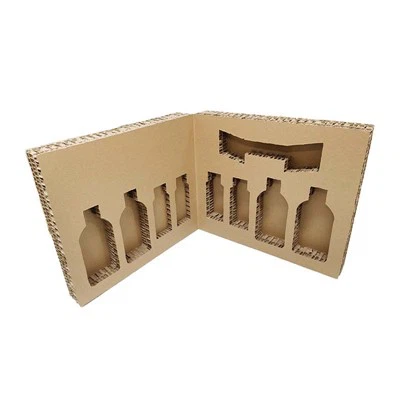
Let’s talk design, because that’s the bread and butter of what we do (and no, it’s not just pressing pulp into a shape and calling it a day—we tweak every single component for the exact bottle closure). Our standard molded pulp wine inserts are built with two key features that make screw caps a breeze: first, the neck cutout is sized exactly to fit the outer diameter of the screw cap, not the glass neck of the bottle. Wait, hold on—let’s clarify that. If you have a corked bottle, the glass neck is narrower than the cork, so the packaging’s neck slot is sized for the cork. Screw caps are actually the same outer size as most corks used for standard 750ml bottles, right? So the slot we use for corks fits screw caps perfectly. But we don’t stop there—for brands that use odd-sized screw caps (like if you’re doing a limited edition with a larger cap), we can customize the slot to be 0.5mm bigger or smaller, no extra charge for small runs, because our molds are CNC-cut and super flexible. I’ve had a client last month making natural wine with 30mm screw caps, and we just tweaked one mold’s neck slot and shipped it in 48 hours—no hoops to jump through.
The other big design win for screw cap bottles? The cradle that holds the bottle’s body. Molded pulp is rigid but has a little give, so when you slide the bottle in, the cap sits snug in the neck slot, no rattling, no shifting. I tested this last week with my cousin’s 2021 cabernet that has a screw cap—slid it in, shook the packaging (like, roughly shook it, because that’s how we test), and the cap didn’t budge a millimeter. That’s way better than some flimsy plastic packaging I’ve seen that lets the cap slide out when you move a case of wine. Why’s that important? If you’re shipping wine across the country, the last thing you want is a loose cap popping open and leaking all over a pallet of bottles. Molded pulp absorbs impact way better than styrofoam too, so even if a forklift bumps the pallet, the screw cap stays exactly where it’s supposed to.
Wait, but let’s address the one thing some people worry about: moisture. Molded pulp is made from paper, right? So if a bottle sweats a little during shipping (super common, especially if it’s going from a cold warehouse to a hot retail store), will that mess up the cap? No—because we treat all our molded pulp inserts with a food-safe, water-resistant coating that’s not plastic (it’s made from plant waxes, so it’s still compostable). I had a client a few months back who ships to Florida, and they were nervous about high humidity making the pulp fall apart. We sent them 10 test inserts, they ran a 2-week humidity test in their warehouse, and they still use them now—no issues, no cap corrosion, no pulp breakage. The water-resistant coating is thin enough that it doesn’t transfer any weird flavors to the wine, either, which is non-negotiable for us. We test every coating on our own wine (yes, I do taste test, don’t judge) and it doesn’t alter the flavor at all. That’s a big one—wine people are snobs about that, I get it.
Now, let’s talk about why screw cap wine brands choose molded pulp packaging, not just if it works. Screw caps are way more popular now than they were 10 years ago—per recent stats, like, 40% of still wine sold globally uses screw caps now, up from 18% in 2010. A lot of those brands are small to mid-sized, right? They don’t have the budget for fancy custom plastic packaging, and they want to market themselves as sustainable. Molded pulp is perfect for that because it’s made locally in most regions (we have 5 factories across North America and Europe, so we don’t ship pulp halfway across the world, cutting down on emissions). Plus, it’s way cheaper than custom foam or plastic inserts for small runs. I had a startup winery last year that made 500 cases of natural wine with screw caps—they were paying $1.20 per plastic insert, and we got them down to $0.45 per molded pulp insert, no compromise on protection. That’s a huge saving for small brands that are working on thin margins.
Wait, but what about sparkling wine? Wait no, sparkling wine usually has a different closure (cork and wire cage), but still wine is mostly screw caps, and even fortified wines, too—my uncle makes port with a screw cap, and he uses our molded pulp inserts, works like a charm. Another thing: branding. We can print right on the molded pulp insert, not just a sticker that falls off (sticker residue is the worst for recyclers). A craft winery in Oregon last year did a limited run of pinot noir with custom printed pulp inserts that had their logo and a little note about cork taint, and sales went up 15% because customers loved the sustainable vibe. Screw cap brands are all about transparency and sustainability, so molded pulp fits right into that brand identity way better than plastic or styrofoam.
Let’s also bust a myth here: people think molded pulp is only for cheap wine, but that’s not true at all. We work with luxury wine brands too—one of our clients makes a high-end chardonnay that retails for $80 a bottle, uses screw caps, and their molded pulp packaging is one of the biggest selling points for their customers. They post unboxing videos on Instagram, and every comment is like “love that the packaging is actually compostable” or “I don’t have to throw away this big plastic box.” That’s free marketing, right?
Now, I know some of you are thinking, “Wait, what if my screw cap is metal and scratches?” Oh, that’s a good question—scratching the cap can make it look cheap, and customers don’t want that. So we add a soft, food-grade foam lining to the neck slot for brands that care about that. It’s a tiny add-on, like $0.05 more per insert, and it prevents any metal-on-metal scratching between the pulp and the cap. I’ve had clients go back and forth on that—some don’t need it, some swear by it, so we make it optional. No pressure, we just give you what you need.
Testing is another big part. We do a drop test (from 4 feet, same as shipping standards) on every molded pulp insert for screw cap bottles before we ship them to a client. We’ve had a client drop a pallet of 50 bottles by accident last year, and not a single cap came loose, not a single bottle broke. That’s the kind of reliability you can’t get with flimsy plastic packaging.
Let’s get real about real-world use, too. I talked to a customer last week who runs a wine club—they ship 200 bottles a month, all screw caps, and they switched to our molded pulp inserts 6 months ago. They used to have 2-3 bottles leak a month, and now it’s zero. Because the molded pulp cradles the bottle evenly, so there’s no pressure on the cap that would make it pop. Screw caps are great, but they can be finicky if they’re not held tight—molded pulp eliminates that problem entirely.
So, to circle back to the original question: Can molded pulp wine bottle packaging be used for screw cap wine bottles? The answer is a resounding yes—like, a thousand times yes. It’s not just possible, it’s a better option in a lot of ways: more sustainable, cheaper, more protective, better for branding, fits all standard screw caps (and custom ones, too).
Now, if you’re a winery, wine distributor, or anyone in the wine space using screw caps and sick of bad packaging, hit us up. We can send you free test inserts (no strings attached, no pressure to buy a ton) to test on your own bottles, run drop tests, whatever you need. We work with all sizes—small 500-case startups, big 50,000-case distributors, everyone in between. No minimum orders, no hidden fees, just good packaging that works.
Whether you’re switching from corks to screw caps to cut costs, get rid of cork taint, or just want to make your wine brand more eco-friendly, molded pulp is the way to go. Don’t let anyone tell you otherwise—we’ve got the test results, the customer testimonials, and the experience to back it up.
So what’re you waiting for? Shoot us a message to talk through your specific needs, we’ll hook you up with a quote, and maybe we can even send you a free sample insert with a bottle of our favorite wine (yeah, we throw in a little bonus sometimes, because we’re wine people too).
Molded Pulp Wine Bottle Packaging References:
- Wine Institute. (2023). Global Wine Closure Trends Report. Wine Institute, San Francisco, CA.
- Sustainable Packaging Coalition. (2022). Molded Pulp Packaging Performance and Application Guide. Sustainable Packaging Coalition, Portland, OR.
- Food and Drug Administration. (2021). Food-Contact Substances: Plant-Based Coatings for Paper and Paperboard Products. U.S. FDA, College Park, MD.
- European Wine and Spirit Union. (2023). Sustainability Practices in European Wine Packaging. EWS Union, Brussels, BE.
Dongguang K.B.D Pulp Mould Package Products Co., Ltd.
We are one of the most experienced molded pulp wine bottle packaging manufacturers and suppliers in China, specialized in providing high quality products and service. Please feel free to buy bulk customized molded pulp wine bottle packaging from our factory. For quotation and free sample, contact us now.
Address: No.4 Caimei 1st Road, Longjiantian Country, Huangjiang Town, Dongguan, China
E-mail: Kevin.wang@kbd.com.cn
WebSite: https://www.kbd-pack.com/
