If you’ve ever stood beside a hydraulic surface grinder during a production run, you might have felt a low, steady hum vibrate through the floor beneath you, or watched as a grinding wheel carves an almost perfectly flat, smooth surface into a steel block. That hum, and the precision it enables, boils down to one critical, often underdiscussed metric: the grinding force. As someone who’s spent 12 years selling and servicing hydraulic surface grinders to machine shops, tool and die operations, and aerospace component makers, I can tell you that grasping what grinding force actually is—how it’s measured, what affects it, and why it matters—isn’t just theoretical. It’s the difference between a part that meets tight tolerances on the first pass, and one that has to be reworked (or scrapped entirely). Hydraulic Surface Grinder

First, let’s cut through the jargon that sometimes muddles this topic. Grinding force isn’t just a single number. It’s a set of forces that act between the rotating grinding wheel and the workpiece during the material removal process. When a hydraulic surface grinder is running, the grinding wheel is spinning at a consistent, controlled speed, pushed against the workpiece by the machine’s hydraulic system (that’s why these machines are so reliable, compared to manual or belt-driven grinders—hydraulics deliver consistent, repeatable force every time, no operator fatigue throwing off measurements). Those two components rubbing together to cut metal don’t just exert one force, though. We break them down into three key axes, which engineers and operators use to diagnose problems and optimize runs.
The most prominent of these is the normal grinding force, often labeled Fn. That’s the force pushing directly perpendicular to the grinding wheel’s surface, straight into the workpiece. This is the force that does most of the material removal, right? The tiny, sharp abrasive grains on the grinding wheel’s surface bite into the workpiece, and Fn is what drives those grains into the material, shearing off tiny chips of metal. For example, when we’re grinding a block of mild steel for a hydraulic cylinder component, Fn might range from 500 to 2,000 Newtons, depending on how deep we set the cut. It sounds like a lot, but when you consider that a single grinding wheel can have thousands of tiny grains, that force is distributed across all those cutting edges, so each grain only takes on a tiny fraction—think millinewtons per grain—preventing individual grains from breaking too quickly.
Then there’s the tangential grinding force, Ft, also called the cutting force. This is the force that acts parallel to the direction of the wheel’s rotation, opposing the wheel’s movement. If you’ve ever tried to hold a piece of metal against a spinning grinder by hand, Ft is the force you feel pulling the workpiece away from the wheel. On a hydraulic surface grinder, the machine’s worktable is secured so it doesn’t move, but the hydraulic system that feeds the wheel across the table has to work against Ft to maintain consistent feed rates. Ft is usually lower than Fn, typically 30 to 70 percent of Fn for most common grinding applications. For example, when grinding a harder material like tool steel, Ft can go up because the abrasive grains have to work harder to shear through the denser material, which means the machine’s feed drive has to be more robust—something we always emphasize when talking to customers who work with high-strength alloys.
The third force is the radial grinding force, Fr, which acts perpendicular to both Fn and Ft, pointing inward toward the center of the grinding wheel. You might not hear as much about Fr in day-to-day operations, but it’s critical for machine longevity. Fr is what causes the grinding wheel to deflect slightly as it cuts, right? If Fr is too high, the wheel can bend, which ruins the flatness of the workpiece. That’s a big deal for surface grinding, where tolerances are often measured in microns—way thinner than a human hair. A small wheel deflection from excessive Fr can make a part that’s supposed to be perfectly flat end up with a slight curve, which is useless for aerospace or medical parts that need to fit together seamlessly. For hydraulic surface grinders, we design the machine’s spindle and wheel mount to minimize Fr-induced deflection, because that’s one of the biggest complaints we hear from customers who’ve switched from cheaper, non-hydraulic grinders.
Now, you might be wondering: how is this force actually measured? A lot of people assume it’s just a gauge on the machine, but that’s not quite right. Modern hydraulic surface grinders are equipped with force measurement systems, usually called dynamometers, which are mounted between the wheel spindle and the machine’s frame, or under the workpiece table. These dynamometers use piezoelectric sensors—similar to the ones in a digital scale, but far more sensitive—that convert the tiny mechanical forces from grinding into electrical signals, which the machine’s control system displays in real time. That data isn’t just for show, either. Operators can use it to adjust their cutting parameters mid-run. For example, if they see Fn spiking higher than expected, that might mean the grinding wheel is dull, so it’s not biting as efficiently and exerting more force per cut. Sharping the wheel (dressing it) brings Fn back down to normal, reducing wear on both the wheel and the machine.
There are a ton of factors that affect grinding force, and I’ve seen every single one of them play out on a customer’s floor over the years. Let’s break down the most common ones, because understanding these is how you get the best results from your hydraulic surface grinder. First, there’s the grinding wheel itself. The type of abrasive grain—aluminum oxide for steel, silicon carbide for cast iron or non-ferrous metals, CBN for hard tool steel—changes how much force is needed. The wheel’s grit size (smaller grit for finer finishes, larger grit for faster material removal) also plays a role: larger grit grains are sharper and can take deeper cuts, so they exert lower force per unit of material removed. Then there’s the wheel’s bond type—vitrified bonds are stiffer than resin bonds, so they resist deflection and help keep force consistent during long runs.
Next, the workpiece material is a huge one. Soft, ductile materials like aluminum deform more easily when ground, which means grinding force can be lower, but it also tends to create thinner, longer chips that can clog the wheel’s pores, leading to a sudden spike in force if not addressed. Hard, brittle materials like carbide, on the other hand, require higher grinding force because the abrasive grains have to fracture the material instead of shearing it, and they’re more prone to cracking if force is too high. We had a customer a few years back who was grinding carbide drill blanks on a cheap hydraulic surface grinder, and he kept having 20 percent of parts crack until he adjusted the force parameters on his machine—using a slower feed rate to spread the force out across more cutting edges solved the problem.
Then there are the machine settings, which is where hydraulic surface grinders really shine compared to manual alternatives. Feed rate (how fast the wheel moves across the workpiece), depth of cut, and cutting speed all directly impact grinding force. If you take a deeper cut in a single pass, Fn will be much higher than if you take multiple shallow passes. For example, a customer grinding a 2-inch thick steel plate for a heavy machinery component might take a 0.010-inch deep cut, resulting in Fn of around 1,500 Newtons, but if he tried to take a 0.050-inch deep cut, Fn would jump to over 7,000 Newtons—enough to bend the worktable, warp the workpiece, or break the grinding wheel. Hydraulic surface grinders let you adjust these settings with precise control, so you can balance speed and force to get the job done right without damaging parts or equipment.
Cutting fluid is another factor that people often overlook, but it has a massive impact on grinding force. Cutting fluid does three main things: it cools the cutting zone, reducing heat that can harden the workpiece and increase force; it lubricates the interface between the wheel and workpiece, making it easier for grains to shear material and lowering friction (thus lowering Ft); and it flushes away the tiny metal chips that would otherwise clog the wheel. I once had a customer who was running a hydraulic surface grinder without any cutting fluid, trying to save money on supplies, and his grinding force was 30 percent higher than it should have been. His wheel was wearing out in half the expected time, and his parts had a rough finish from chips getting trapped between the wheel and the workpiece. Once he switched to a semi-synthetic cutting fluid, all those problems went away, and his grinding force dropped back to normal levels.
So why does all this matter for you, as someone who’s looking to purchase a hydraulic surface grinder? Let’s be real: every machine shop wants a grinder that can produce accurate parts, last for years, and operate efficiently. Grinding force is the backbone of that performance. If your machine can’t control grinding force consistently, you’ll end up with parts that are out of tolerance, high scrap rates, expensive wheel replacements, and wasted time. Hydraulic surface grinders are designed specifically to deliver that consistent control, because the hydraulic system provides steady, uniform force throughout the entire grinding pass—no jerky movements like you can get from mechanical drives, no operator error from applying uneven force.
I’ve seen this play out time and time again. A customer who switched from an old manual surface grinder to a hydraulic model told me that his grinding force variations dropped by 40 percent, which cut his scrap rate by 25 percent and allowed him to take on high-tolerance aerospace jobs he’d been turned down for before. Another customer in the automotive industry uses his hydraulic surface grinder to grind cylinder heads, where flatness is critical for engine performance. By monitoring and adjusting grinding force, he’s been able to extend the life of his grinding wheels by 15 percent, saving him thousands of dollars a year in supplies.
Now, if you’re in the market for a hydraulic surface grinder, the most important thing to remember is that grinding force isn’t just a technical spec—it’s a reflection of the machine’s design quality. Cheaper grinders often have weaker hydraulic systems, less robust spindles, and basic force measurement systems that can’t handle the precise adjustments needed for demanding work. A high-quality hydraulic surface grinder will have a rigid frame to resist deflection, a precision force dynamometer for real-time monitoring, and a control system that lets you adjust force, feed rate, and depth of cut with micron-level accuracy. That’s the kind of machine that doesn’t just meet your current needs—it grows with you, as you take on new projects and work with different materials.
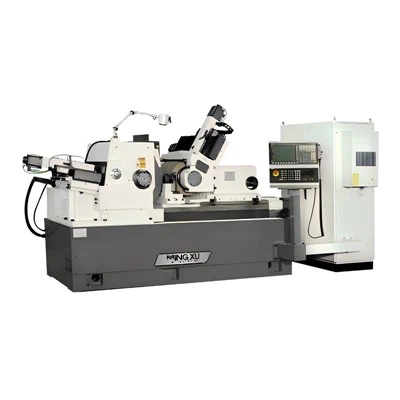
At the end of the day, grinding force is the silent conductor of the surface grinding process. It dictates everything from how smooth your parts are, to how long your machine and tools last, to your overall production costs. If you’ve been struggling with inconsistent results from your current grinder, or if you’re ready to invest in a hydraulic surface grinder that can handle your toughest jobs, don’t hesitate to reach out to our team for a no-obligation consultation. We can walk you through the different models we offer, talk about how grinding force plays into their design, and help you find the perfect match for your workshop’s needs. Whether you’re grinding small medical components or large industrial parts, our hydraulic surface grinders are built to deliver the consistent, controlled grinding force you need to get the job done right, every time.
Centerless Grinding Machine References
- Malkin, S., & Guo, C. (2008). Grinding Technology: Theory and Applications of Machining with Abrasives. Industrial Press.
- Shaw, M. C. (1996). Principles of Abrasive Processing. Oxford University Press.
- Webster, J. A., & Mindek, R. M. (2006). “Grinding Force Measurement and Its Application to Process Monitoring.” Journal of Manufacturing Science and Engineering, Vol. 128, No. 4, pp. 874–882.
- Brinksmeier, E., et al. (2010). “Advances in Grinding Process Monitoring and Control.” CIRP Annals – Manufacturing Technology, Vol. 59, No. 2, pp. 678–698.
Wuxi Mingxu Machinery Equipment Co., Ltd.
As one of the most professional hydraulic surface grinder manufacturers and suppliers in China, we’re featured by quality products and good price. Please rest assured to buy the best hydraulic surface grinder for sale here from our factory. Also, custom service is available.
Address: No. 5-5 Jinke Wealth Plaza, Changjiang North Road, Xinwu District, Wuxi City, Jiangsu Province
E-mail: yingyingmxjd@163.com
WebSite: https://www.mingxu-china.com/
